The sound of aircraft is considered a major source of sound pollution in big cities such as London or New York, where at times air traffic can come in staggeringly short intervals. But in Anguilla, a small speck of coral and limestone perched in the northeast corner of the Caribbean, the roar of jet or prop engines carries a special tone of romance.
Anguillians have been fascinated by the sight of aircraft ever since they spotted the first of these odd winged creatures patrolling the skies during World War II, when several nearby locations were identified and cleared by the Allies to use as strategically important dust strips in their efforts to guard against the German U-boat.
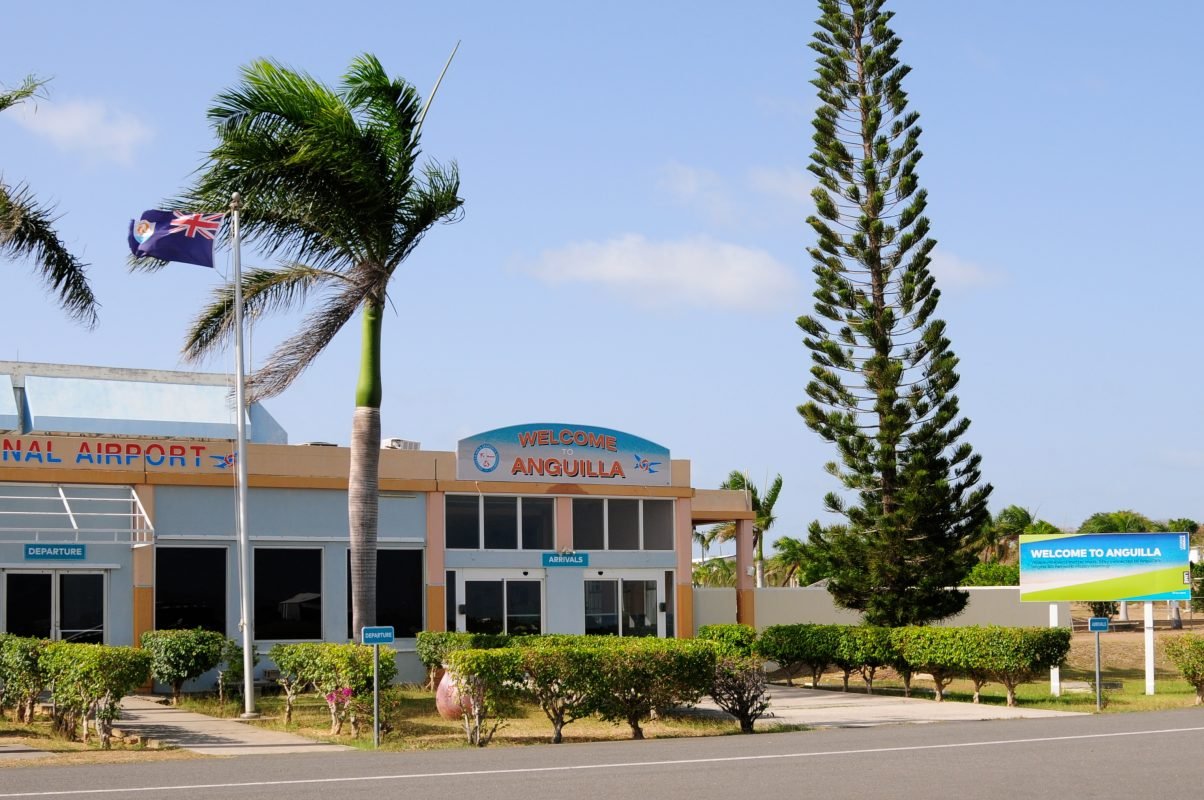
One such location was the plains of the one-time Wallblake plantation, which still today house Anguilla’s Clayton J Lloyd airport. That this is Anguilla’s gateway to the outside world is neither surprising nor by any means unique—after all there are always two and only two ways out of most islands: by sea or by air. But in a territory where isolation and neglect were commonplace for centuries, this is also a symbol of achievement and a living tribute to the people and the stakeholders who have made such achievement possible.
As you walk into the terminal building of Anguilla’s airport there is the row of check-in counters on the west end of the structure, which, like a map, provides a detailed—if not an exhaustive—account of the history of aviation in Anguilla: pride of place these days is given to American Airlines, which after an absence of more than a decade returned in 2021 with a direct flight connecting Anguilla with Miami. For the first time ever a bridge had been established to the mainland, bringing fresh life to the island’s economy and a newfound sense of comfort to its people.
The fact that American Airlines have inherited, as it were, the post that for decades was manned by Liat agents might be a coincidence but it certainly is not devoid of symbolic significance. Because in the beginning of aviation in Anguilla there was none other than Liat servicing the island (back in the days of the Federation of the West Indies and beyond) with its distinctive four-engined de Haviland Heron and later on its smaller Britten Norman Islander. For decades flying in the Caribbean was synonymous with Liat, and despite its dismal time-keeping record—not for nothing was the airline known as Leave Island Any Time—it is hard to imagine the ubiquitous blue and orange logo is no more.
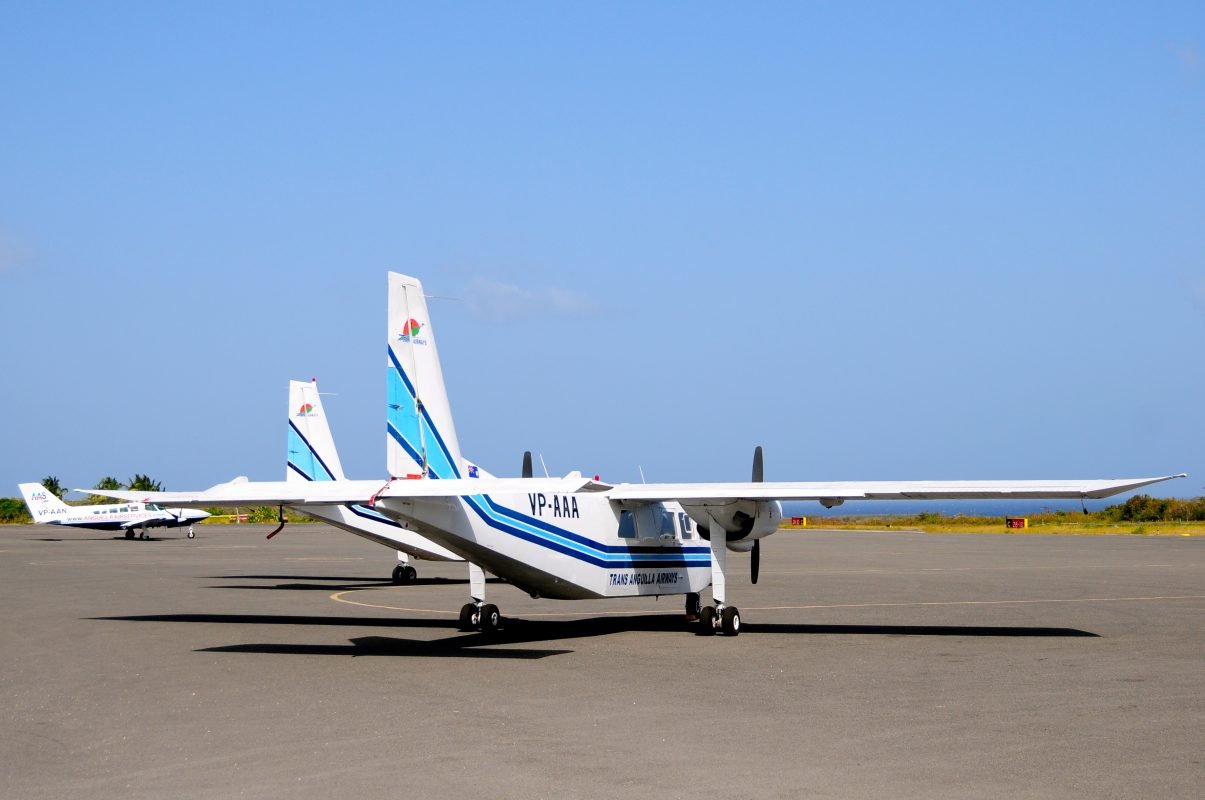
Yet such has been the case at Clayton J Lloyd airport since 2016, when Liat stopped servicing Anguilla, clearing space for other regional carriers such as Tradewind Aviation, Cape Air or Silver Airways to take over. And then there’s the local airlines populating the check-in counters all the way to the end of the building—Lloyd’s Aviation, Carl Thomas’s Anguilla Air Services, Lincoln Gumbs’s Trans Anguilla Airways, and so on and so forth.
All these names and people conspire, almost wilfully, to fling us back in time and to interact with a different era. In this sense, the airport’s relatively new name—only in 2010 was Wallblake airport turned into Clayton J Lloyd International—takes us all the way to the very start, for no Anguillian soared the skies prior to Clayton Jeremy Lloyd, the man who as a child was mesmerized by the sound of the DC-3 that regularly flew in from Puerto Rico to load up with Anguillian lobster.
Encouraged by Jeremiah Gumbs, his uncle, Clayton trained as a pilot in New Jersey, obtained a commercial license, and partnered with Uncle Jere in the creation of Anguilla Airways, the island’s first commercial airline, which was meant to develop over time into a major enterprise comprising commercial, cargo, maintenance and instructional activities. This was in 1965, two years before the defining moment in Anguilla’s recent history, the 1967–69 revolution, and Anguilla Airways served as the springboard to the first generation of Anguillian fliers, including Maurice Connor, Beavan Hodge and the American Lynn Asberry, who would later make a rather amusing and not insignificant contribution of his own to the revolutionary cause.
So did Clayton, flying the first batch of disarmed policemen back to St. Kitts on 30 May 1967. By then, however, his Piper Aztec carried the name of Valley Air Services (VAS), as he had spun off from Anguilla Airways, partnering with his childhood friend Michael Hughes—Anguilla’s second pilot—and an American by the name of John McClees to found the new airline. During the years of conflict with St. Kitts, when Liat and WinAir stopped flying to Anguilla, the value of the service provided by these airlines, as well as by St. Thomas Air Taxi, another private enterprise funded by Paul and Vera Randall, an American couple living in Anguilla, was incalculable.
While Anguilla Airlines’ ambitious plans stalled, VAS added a second Aztec in ’67 and two Beech Twin Bonanzas in ’69, poaching Maurice Connor from Anguilla Airways that same year and also hiring another Anguillian pilot, Derek Thompson. At the same time, Kenneth Fleming purchased his own plane and started Fleming Air Transport—the fever had caught on. Over the next ten years all three original Anguillian airlines would fold, but they would also be replaced with others which followed quick and steadily on their footsteps.
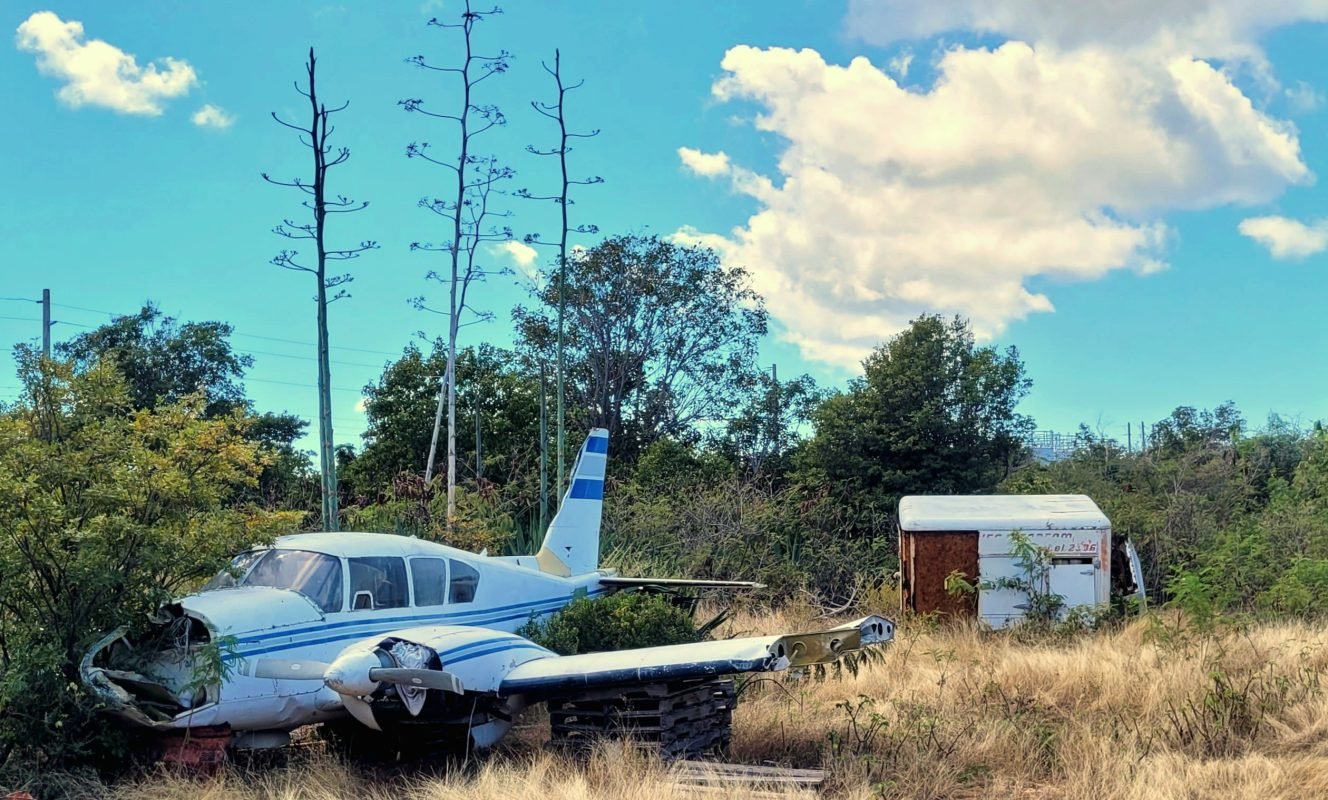
The history of aviation in Anguilla is, of course, also a story of infinite sadness—from the fateful day when VAS’s Beech Twin Bonanza piloted by Clayton Lloyd caught fire in Juliana Airport on Christmas Eve 1977 to the dark early morning in 2012 when Captain Kirby Hodge’s Piper Aztec crashed into the sea during his regular paper run from St. Croix to St. Thomas; from the tragic day in October 1982 when Carib Air’s Piper Navajo got caught in adverse weather conditions on its way to St. Thomas to the stormy summer’s day in 1998 when Air Anguilla’s Cessna 402 encountered difficulties as it approached Melville Hall airport in Dominica.
At the same time the history of aviation in Anguilla is a story of progress, the story of a people’s efforts to meet challenges and to succeed in the face of adversity. It is the story of a small dust strip built in 1943 and of its various stages of development, from the time when only a small section of its west end was paved, to the many years when it welcomed visitors without the need of a control tower, which was only built in 1990, following the airport’s first major upgrade in 1988.
It would take another 15 years for the next wave of change to boost the airport but when it did it rocked Anguilla’s world. In 2005, after years of discussion and even plans to move the airport or build a new one in Brimegin, the runway at Wallblake airport was expanded and made suitable for jet planes—albeit only private ones. For weeks and months during the peak of the high season in 2005/2006 Anguillians would park by the side of the road towards the eastern end of the runway to see the Grummans and Cessnas and Dassaults visiting from faraway lands and sprinkling Wallblake with a previously unmatched level of panache.

For all the progress Anguilla has made over the last four decades, the road travelled is still patently visible everywhere you look, not least at the airport in Wallblake, where the Britten Norman Islanders operated by Anguilla Air Services or Trans Anguilla Airways (and notice the echo of past airlines in these names!) are in constant dialogue with the Learjets or the Gulfstreams arrived from the north—Anguilla’s past and present in harmonious coexistence.
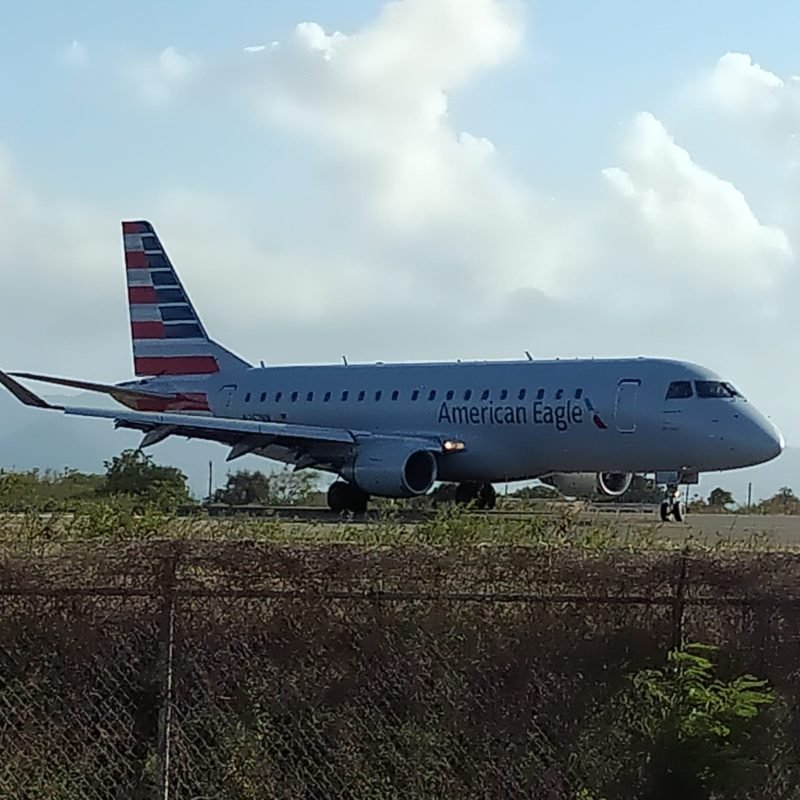
And then, on Saturday 11 December 2021, the future joined the party, loud as a pair of afterburners bringing a commercial jet to a full halt. It was hardly a remarkable scene, just a small airliner touching down, an Embraer E175, a pretty little jet to be sure, compact, modern, but nothing out of the ordinary. Nothing, in fact, Anguillians wouldn’t have seen over the last fifteen years. And yet, at Clayton J Lloyd airport it was a traffic-stopping sensation, with crowds of Anguillians lining the main road along George Hill, parallel to the runway, to witness and greet the arrival of AA’s maiden flight 3780 from Miami.
More than fifty years after Vidiadhar Surajprasad Naipaul characterised Anguilla, in typically ungenerous fashion, as ‘the shipwrecked six thousand’, the tables have finally turned. Anguilla has caught up with lost time remarkably well over the last forty years, shaping this small tropical enclave into a luxury destination where the simple pleasures of yesteryear are routinely, if somewhat incongruously, intertwined with the comforts of modern life. At last, in the thick of the 21st century, Anguilla can safely and confidently claim to be shipwrecked no more.
This piece borrows from “A Brief Story of Aviation in Anguilla” published by Design Anguilla in June 2015 and “Shipwrecked No More”, a commentary posted on the blog of gumko.com.